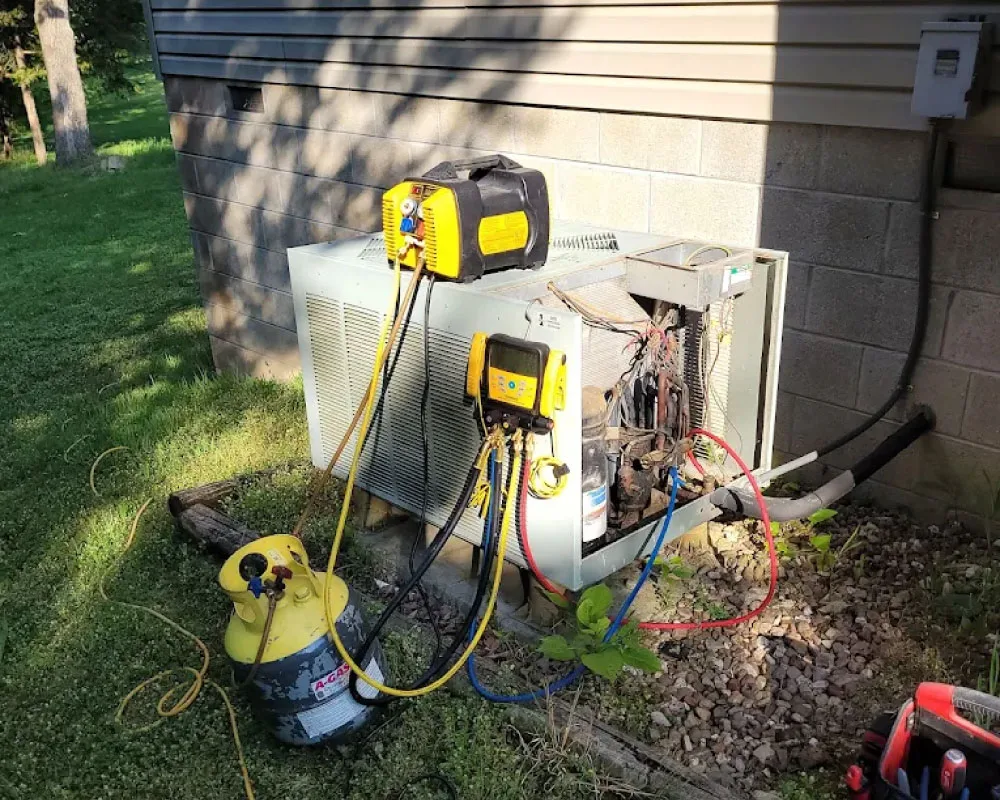
Furnace Maintenance Plans
Furnace Maintenance & Preventive Tune-Up Plans in Branson, MO
A well-maintained furnace heats reliably all winter, runs efficiently, and avoids expensive mid-season emergencies. Our annual or bi-annual maintenance plans include professional cleaning, safety testing, combustion analysis, and written recommendations - so your furnace starts when you need it and runs at peak efficiency year after year.
Get a Free Estimate
Why Choose Us
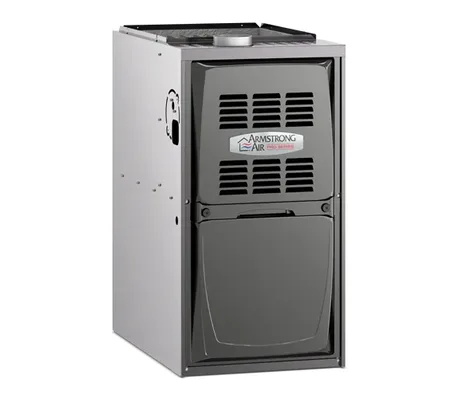
Why Branson Homeowners Choose Our Furnace Maintenance Plans
A well-maintained furnace is a reliable furnace. Here’s what sets 360 Comfort Solutions apart when it comes to preventive care and annual tune-ups.
Ready to Protect Your Furnace & Your Heating Budget?
Whether you’re a new homeowner looking to start preventive care, or you’ve had a repair and want to prevent future breakdowns, a maintenance plan is the smart choice for winter reliability and efficiency.
Our Maintenance Process
What’s Included in Our Annual Furnace Maintenance Plan
From burner cleaning to final documentation, here’s exactly what 360 Comfort Solutions covers on every furnace maintenance visit.
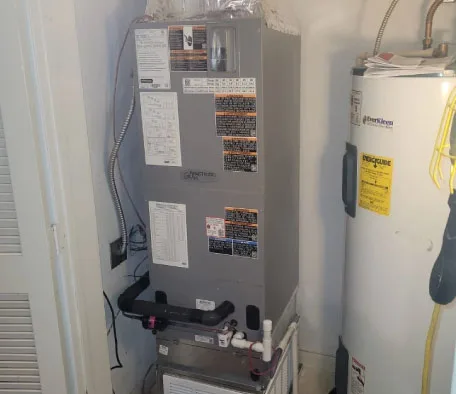
Step 1: Professional Burner Cleaning & Inspection
Over a heating season, burner assemblies accumulate dust, oxidation, and scale - especially in older homes with dirty return air or poor filter habits. We remove the burner assembly, clean all components with specialized tools, inspect for corrosion or damage, and reinstall with fresh gaskets and seals. A clean burner lights reliably, burns fuel efficiently, and produces steady blue flames (not yellow or orange, which indicate incomplete combustion). This single step often improves efficiency by 3–5%.
- Carefully remove burner assembly from the furnace
- Clean all burner ports and orifices with specialized brushes and compressed air
- Inspect for corrosion, warping, or damage
- Test pilot orifice and fuel nozzles for debris
- Clean or replace air inlets as needed
- Reinstall with new gaskets and proper alignment
- Test ignition and flame color after reassembly
Step 2: Heat Exchanger Inspection & Safety Verification
The heat exchanger is where combustion heat is transferred to your home’s air - it’s also where a cracked or leaking unit can expose you to carbon monoxide. We visually inspect the exterior for rust, corrosion, or visible cracks. We measure temperature rise across the heat exchanger under load to confirm it’s transferring heat properly. If we find any signs of cracking or abnormal corrosion, we’ll recommend replacement immediately - safety is non-negotiable.
- Visually inspect heat exchanger exterior for cracks, corrosion, or rust
- Measure temperature rise across the heat exchanger (confirms heat transfer)
- Check for signs of moisture or condensation (indicates venting problems)
- Listen for draft issues indicating venting or seal failures
- Perform combustion analysis (measures CO, oxygen, efficiency)
- If cracks or hazards are detected, recommend immediate replacement
- Document findings on the maintenance report
Step 3: Combustion Analysis & Efficiency Testing
Using a calibrated combustion analyzer, we measure your furnace’s actual performance: oxygen levels in the flue gas, carbon monoxide concentration, combustion efficiency percentage, and temperature. These measurements tell us if your furnace is burning fuel cleanly and efficiently, or if adjustments are needed. If combustion is incomplete, we adjust gas pressure or air intake to bring it back to specification. If combustion is efficient, you get documented proof that your furnace is operating safely.
- Connect combustion analyzer to flue vent
- Measure O\u2082 (oxygen), CO (carbon monoxide), CO\u2082, and combustion efficiency %
- Record all readings on maintenance report
- Compare to furnace nameplate specifications
- If results are outside spec, adjust gas pressure or combustion air
- Retest to confirm improvements
- Provide homeowner with efficiency percentage (for fuel-saving tracking)
Step 4: Control System & Safety Switch Testing
Furnaces have multiple safety systems: limit switches (prevent overheating), rollout switches (detect flame outside the combustion chamber), pressure switches (verify draft), and blower relays (control fan operation). We test each switch under actual operating conditions - the furnace must cycle on and off, the blower must respond to calls, and all shutoff switches must trigger when they should. A failed safety switch is a serious hazard.
- Test limit switch: measure temperature at which it opens
- Test rollout switch: verify it detects abnormal flames
- Test pressure switch: confirm draft sensing works correctly
- Test blower relay: verify fan starts and stops on demand
- Test thermostat continuity: ensure thermostat is wired correctly
- Verify all safety interlocks respond correctly
- Replace any failed switches and retest
Step 5: Blower Motor & Airflow Verification
Your furnace’s blower motor distributes heat throughout your home. We check blower motor voltage and current draw, listen for bearing wear or unusual noise, and verify airflow is strong at all supply registers. We also measure static pressure in the ductwork - if pressure is high (indicating blocked return air or clogged filter), we identify the blockage. Weak or uneven airflow often indicates dirty ductwork, a clogged filter, or a failing blower motor.
- Check blower motor voltage and amperage draw
- Listen for bearing wear, squealing, or unusual noise
- Measure airflow at supply registers (CFM if equipment available)
- Test static pressure in return and supply ductwork
- Check air filter condition and cleanliness
- Identify any ductwork restrictions or blockages
- Recommend filter replacement if needed
- Replace blower belt if applicable and worn
Step 6: Thermostat Calibration & System Cycle Verification
Your thermostat controls when the furnace runs. We verify the thermostat is reading temperature accurately (compared to a calibrated thermometer), that it’s calling for heat when set correctly, and that it’s stopping the furnace when set-point is reached. We also run the furnace through complete heating cycles - startup, normal operation, and shutdown - to confirm everything responds as designed. We program your thermostat for your comfort preferences if needed.
- Verify thermostat temperature reading against calibrated reference
- Check thermostat battery (if battery-powered) and replace if needed
- Test thermostat call-for-heat signal
- Run furnace through multiple complete heating cycles
- Measure time-to-heat and steady-state operation
- Verify thermostat shuts off furnace at set-point
- Program schedule if desired (morning, evening, away modes)
- Explain thermostat controls to homeowner
Step 7: Ductwork & Return Air Assessment
Leaky ductwork, crushed ducts, or blocked return air can severely reduce furnace performance. During maintenance, we visually inspect accessible ductwork for leaks, damage, or blockages. We check return air intake for restriction (dirty filter, covered vents, furniture blocking airflow). We test static pressure to confirm the return air path is clear. If we find problems, we recommend sealing, repair, or cleaning.
- Visually inspect accessible supply and return ductwork
- Check for air leaks, crushed sections, or poor connections
- Verify return air intake is unobstructed
- Measure static pressure to assess return air restriction
- Check filter location, type, and cleanliness
- Recommend filter replacement if overdue
- Identify any ductwork that needs sealing or repair
- Document findings on report with photos if needed
Step 8: Final Documentation & Recommendations
We provide you with a comprehensive maintenance report listing all inspections, test results, and observations. We highlight any wear patterns or upcoming needs (“blower bearing is showing early wear - budget for replacement within 2 years”). We explain any needed repairs and recommend next steps. You receive the report in writing, so you have a complete record of your furnace’s condition and maintenance history.
- Provide written maintenance report documenting all inspections and tests
- List all measurements: efficiency %, combustion readings, temperatures
- Highlight any concerns or upcoming maintenance needs
- Explain any recommendations for repair or replacement
- Answer homeowner questions about findings
- Discuss fuel-saving strategies based on furnace condition
- Advise on filter replacement intervals and seasonal tasks
- Provide contact information for follow-up questions
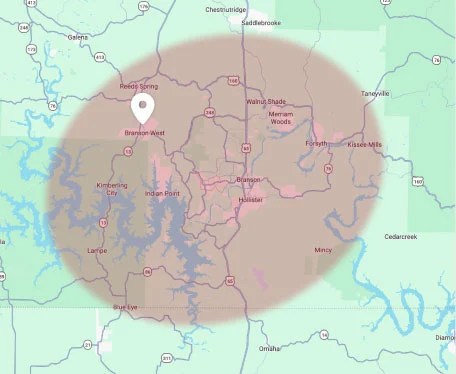
Don’t See Your Location?
We may still be able to help! Give our team a call today to see if we service your neighborhood, and we’ll be happy to assist you.
Service Areas
Furnace Maintenance Plans Available Across Southwest Missouri
We offer annual and bi-annual maintenance plans to homeowners throughout the Branson region - from our home base out to the smaller communities along the Table Rock Lake corridor.
Proudly Serving Our Communities Around:
Other Locations We Serve:
Explore More
Complete Furnace & Heating Care
A maintained furnace performs best as part of a complete home comfort strategy. Explore the related services we provide for homes and businesses across the Branson area.
Furnace Installation & Replacement
Ready for a new high-efficiency furnace? We handle proper sizing, installation, and integration with your existing systems.
Explore Furnace Installation & ReplacementFurnace Repair & Emergency Service
If your furnace breaks, we diagnose and repair it fast - same-day response available for heating emergencies.
Explore Furnace Repair & Emergency ServiceHeat Pump Maintenance & Service
If you have or are considering a heat pump for year-round heating and cooling, we offer maintenance plans for those systems too.
Explore Heat Pump Maintenance & ServiceAir Conditioning Maintenance
Your furnace heats in winter; our AC maintenance keeps your cooling system running efficiently in summer.
Explore Air Conditioning MaintenanceDuctwork Cleaning & Sealing
Leaky, dirty ducts reduce furnace efficiency by 15–20%; we clean and seal ducts to maximize heating performance.
Explore Ductwork Cleaning & SealingIndoor Air Quality & Humidity Control
Winter air is dry; we install humidifiers and air filtration to complement your furnace and improve comfort.
Explore Indoor Air Quality & Humidity ControlYour Furnace Maintenance
Protect Your Furnace & Your Heating Budget with Annual Maintenance
A furnace is one of the hardest-working systems in your home. Every winter, it runs for months - sometimes for 8+ hours per day on the coldest weeks. That wear and tear is why annual tune-ups matter. A maintained furnace is a reliable furnace. 360 Comfort Solutions is backed by 40+ years of hands-on furnace experience. We’ve learned what fails, what wears, and what’s worth monitoring. Our maintenance plans are built on that experience - we catch problems early, keep your system efficient, and give you the confidence that your furnace will start on the coldest night.
Questions & Answers