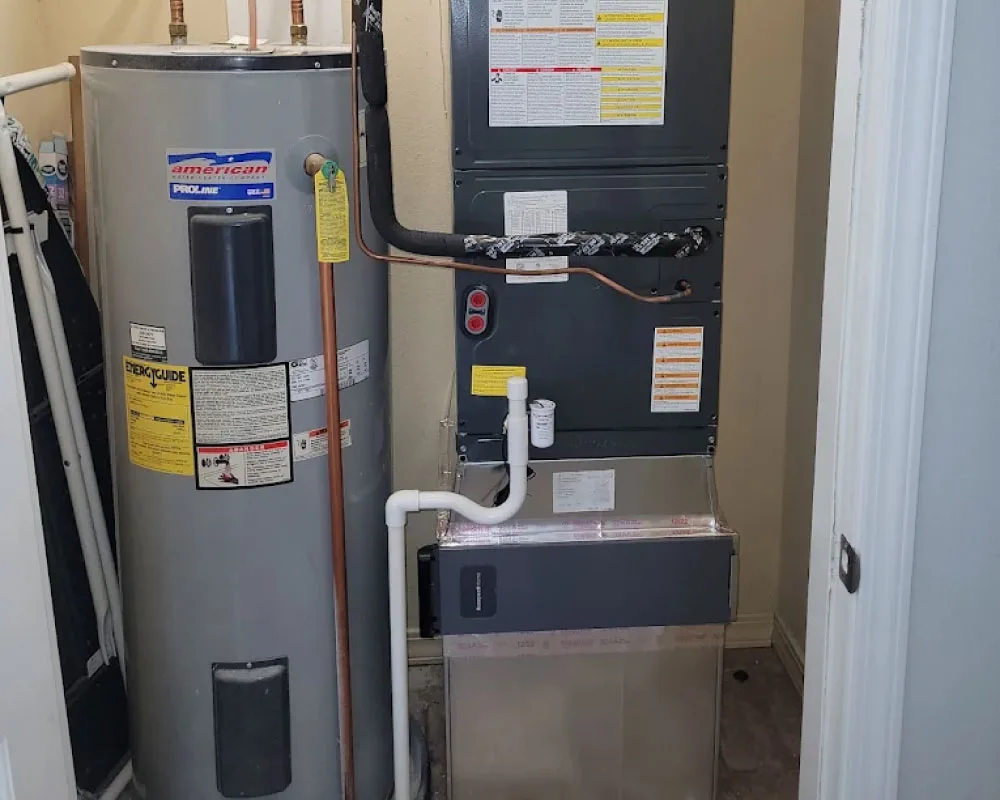
Tank Water Heater Installation
Professional Tank Water Heater Installation in Branson, MO
Looking for a reliable water heater that delivers hot water when you need it? We install gas and electric tank models sized right for your household, positioned for maximum efficiency, and backed by professional service and expertise.
Get a Free Estimate
Why Choose Us
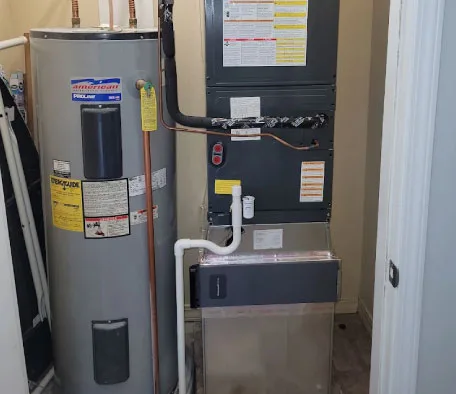
Why Branson Homeowners Choose Us for Tank Water Heater Installation
A properly sized and professionally installed tank water heater delivers reliable hot water for 12–15 years. Here’s what sets 360 Comfort Solutions apart when it’s time to install or replace your system.
Ready to Install a Dependable Tank Water Heater?
Whether you’re replacing an aging unit, upgrading to a more efficient model, or installing in a new space, we’ll guide you through options and handle installation with precision.
Our Installation Process
How We Install Your Tank Water Heater System
From the first assessment to the final walk-through, here’s exactly what to expect when 360 Comfort Solutions installs your new tank water heater.
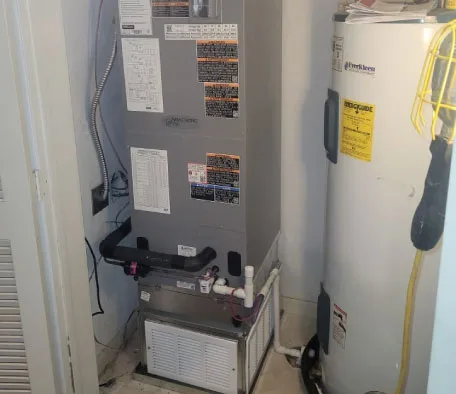
Step 1: Home Assessment & Tank Sizing Analysis
Your installation starts with understanding your household’s hot water needs. We ask: How many people live in your home? How many bathrooms? Do you take baths or showers, and how often? Do you use a dishwasher, washing machine, or hot tub? What’s your preference - do you want the longest possible hot water supply, or is your priority lower energy bills? We note your current tank location, access, venting setup, and water/gas/electrical infrastructure. We also measure your home’s incoming water temperature (varies seasonally in Missouri) and water pressure. This data lets us calculate the right tank size and recovery rate for your actual usage pattern.
- Discuss household size, bathrooms, appliance hot water usage
- Document current tank location, venting, and utility connections
- Measure incoming water temperature and pressure
- Identify any infrastructure limitations (gas line size, electrical service, venting route)
- Calculate peak simultaneous demand in gallons per hour
- Recommend tank size: 40, 50, 60, 75, or 80 gallons based on recovery rate and demand
- Discuss fuel type: natural gas, propane, or electric
Step 2: Equipment Selection & Quote Review
Based on your demand analysis, we recommend tank options across efficiency and price tiers. A basic 40-gallon electric unit delivers value and simplicity; a 50-gallon gas model with higher recovery rate handles larger households; a 75-gallon high-efficiency model with better insulation costs more upfront but saves money on utility bills year after year. We show you Energy Factor (a measure of efficiency), warranty lengths (typically 3 years basic, 6–12 years premium), and annual energy cost estimates. We help you weigh: Is the premium for higher efficiency worth it if you plan to stay in your home 10+ years? Or is the lowest cost model better for a shorter timeline? You decide; we provide the data. We also identify any available manufacturer rebates or utility incentives on qualified units.
- Present gas, electric, and hybrid (with heat pump assist) tank options
- Compare Energy Factor ratings and annual energy costs
- Show warranty coverage differences: basic vs. premium plans
- List available rebates: manufacturer, utility company, federal tax credit eligibility
- Explain recovery rate: how long between hot showers with your tank size
- Provide detailed written quote with model, size, fuel, and installation scope
- Review financing options if needed
Step 3: Utility Infrastructure Assessment & Planning
Many installations require utility upgrades. For a gas model, we verify your gas line is adequate diameter and pressure for a tank water heater (usually ½-inch line to the unit, with adequate supply from the meter). For electric models, we confirm your electrical panel has sufficient capacity for a 30–50 amp circuit. If upgrades are needed, we discuss scope and timeline upfront. We also evaluate your venting route (for gas tanks, vent pipe must slope properly and terminate safely outdoors). If your current location has venting issues, we may recommend repositioning the tank to a better location. For homes with high water pressure (above 80 PSI), we install a pressure regulator to protect your tank and home plumbing from strain.
- Verify gas line diameter and pressure adequacy (gas models)
- Check electrical panel capacity and available breaker slots (electric models)
- Plan venting route and confirm clearances from windows and air intakes
- Assess water pressure and install regulator if needed (typical threshold: 80 PSI)
- Plan drain and overflow line routing
- Confirm optimal tank location based on distance to hot water fixtures
- Identify any permits or inspections required by local code
Step 4: Professional Installation & System Integration
Our installation crew arrives with your chosen tank and completes the full installation. We turn off your home’s water supply and drain the old tank (if replacing). We disconnect gas or electrical supply from the old unit and remove it. We prepare the location: ensuring level floor, confirming structural support for the tank weight, and positioning for optimal venting and maintenance access. We install your new tank and connect the incoming cold water line with shut-off valve, dip tube, and thermometer. We connect the hot water outlet line with check valve. For gas models, we connect the gas supply with regulator and shut-off valve, run the vent pipe with proper slope and termination, and install the burner assembly. For electric models, we run the electrical circuit from the panel, install a disconnect switch, and wire the heating element. We install the temperature/pressure relief valve (required by code). We fill the tank and bleed air from the system before powering on.
- Turn off water supply and drain old tank (if replacing)
- Disconnect and remove old tank and connections
- Install tank on level, structurally sound location
- Connect cold water inlet with shut-off ball valve and check valve
- Connect hot water outlet line
- Install temperature/pressure relief valve with proper drain line routing
- Connect gas supply (gas models) with regulator, shut-off, and proper line material
- Connect electrical supply (electric models) with proper circuit breaker and disconnect
- Install vent pipe with proper slope and outdoor termination (gas models)
- Fill tank slowly and purge air from hot water lines
- Perform pressure testing on all connections
Step 5: System Commissioning, Testing & Owner Education
Before we finish, your new tank is tested thoroughly. We power it on and monitor temperature rise for 15–30 minutes to confirm the heating element (electric) or burner (gas) functions properly. We test the temperature/pressure relief valve by holding the lever to confirm it opens and drains as intended. We measure outlet water temperature at various flow rates to ensure stability. For gas units, we perform combustion analysis to confirm safe, efficient operation and check the vent draw. We adjust the setpoint temperature (typically 120–130°F, depending on preference). We walk you through everything: how to adjust temperature on the thermostat, how the relief valve works and why it matters, how to locate shut-off valves, and what to do if you hear unusual noises or see leaks. We leave you with the tank manual, warranty documentation, our service number, and a maintenance schedule recommendation.
- Activate heating element or burner and monitor temperature rise
- Verify hot water reaches all fixtures at expected time and temperature
- Test temperature/pressure relief valve for proper function
- Perform combustion analysis and vent draw testing (gas models)
- Adjust setpoint temperature to your preference (typically 120°F)
- Flush out any factory rust or manufacturing debris from the tank
- Walk you through thermostat adjustment, relief valve function, and shut-off locations
- Explain warranty coverage and recommended maintenance interval (annual flushing)
- Provide complete documentation: manual, warranty, service contact
- Leave emergency number for after-hours issues
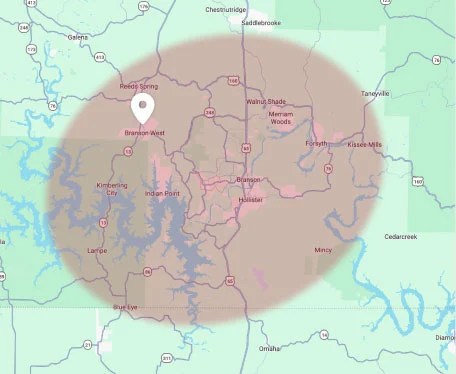
Don’t See Your Location?
We may still be able to help! Give our team a call today to see if we service your neighborhood, and we’ll be happy to assist you.
Service Areas
Tank Water Heater Installation Service Areas in Southwest Missouri
We install tank water heater systems across the Branson region and surrounding communities - from our home base out to the smaller communities along the Table Rock Lake corridor.
Proudly Serving Our Communities Around:
Other Locations We Serve:
Explore More
Full Water Heating & Home Comfort Services
A new tank water heater performs best as part of a complete home comfort system. Explore the related services we provide for homes and businesses across the Branson area.
Tank Water Heater Repair & Service
When your tank fails or runs cold, we diagnose issues fast and handle replacement of heating elements, thermostats, and anode rods.
Explore Tank Water Heater Repair & ServiceTank Maintenance & Tune-Up Plans
Annual flushing and inspection to extend tank life and maintain efficiency year after year.
Explore Tank Maintenance & Tune-Up PlansTankless Water Heater Systems
If you’re interested in endless hot water, we install and service on-demand tankless systems.
Explore Tankless Water Heater SystemsWater Conditioning & Softening
Branson’s hard water shortens tank life. Water softening reduces sediment and extends your tank’s lifespan significantly.
Explore Water Conditioning & SofteningHeat Pump Installation & Service
Complete home comfort includes efficient heating. We install heat pump systems to pair with your water heating.
Explore Heat Pump Installation & ServiceFinancing Options
Flexible payment plans make upgrading affordable without a large upfront cost.
Explore Financing OptionsYour Tank Water Heater Installation
Invest in Reliable Hot Water for Your Home
A dependable tank water heater is one of the most fundamental comfort systems in your home. The right unit - sized for your household, installed correctly, and maintained annually - will deliver reliable hot water for 12–15 years without surprises. Our 40+ years of hands-on experience means we know which systems perform well in the Branson area, understand the hard water challenges that affect longevity, and are committed to supporting your system with professional service long after installation. Call us for a free in-home evaluation and let’s find the perfect tank water heater for your home.
Questions & Answers