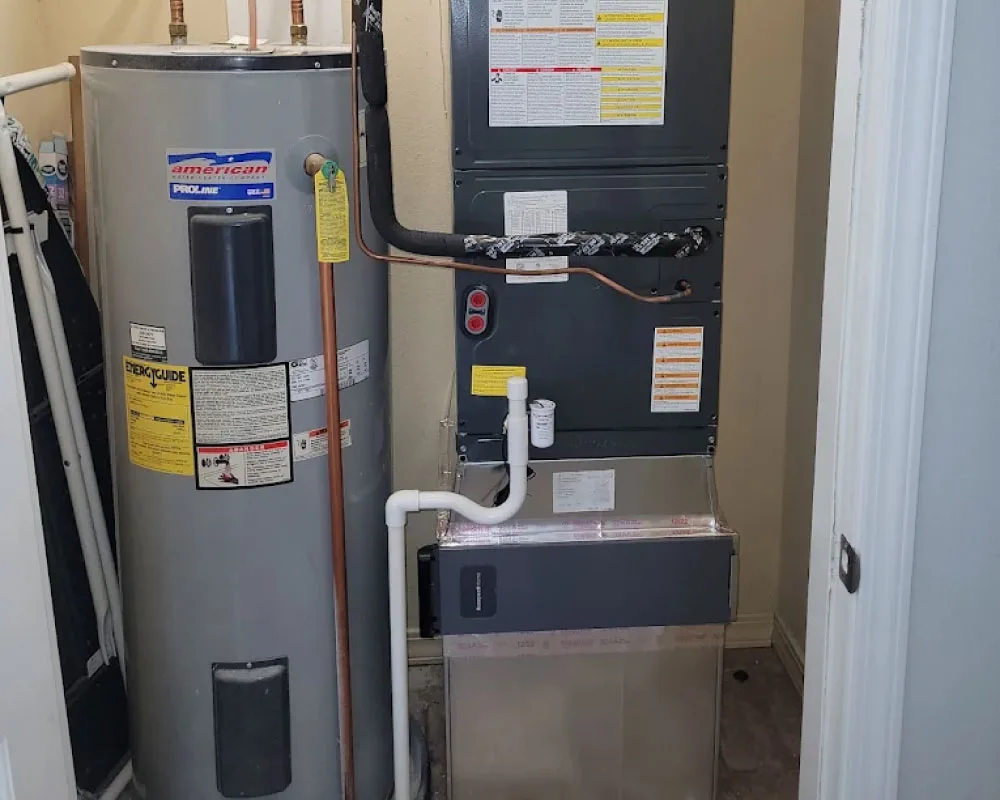
Tank Water Heater Repair
Tank Water Heater Repair in Branson, MO
Sudden cold showers, puddles under your tank, or strange noises? Your tank water heater may need emergency diagnosis and repair. We identify problems fast and get your hot water back online - often the same day you call.
Get a Free Estimate
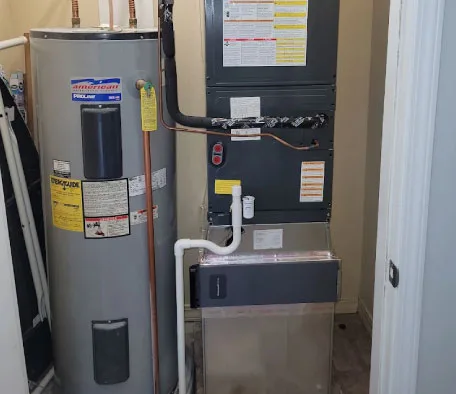
Why Choose Us
Why Branson Homeowners Trust Us for Tank Water Heater Repair
A failed water heater disrupts your entire household. Here’s what sets 360 Comfort Solutions apart when you need fast, accurate tank water heater repair.
Experiencing Tank Water Heater Problems?
Whether your tank is losing water, producing no hot water, or making concerning noises, we diagnose the issue and repair it fast. Contact us for immediate assessment.
Our Repair Process
How We Diagnose and Repair Your Tank
From your first call to the final walk-through, here’s exactly what to expect when 360 Comfort Solutions repairs your tank water heater.
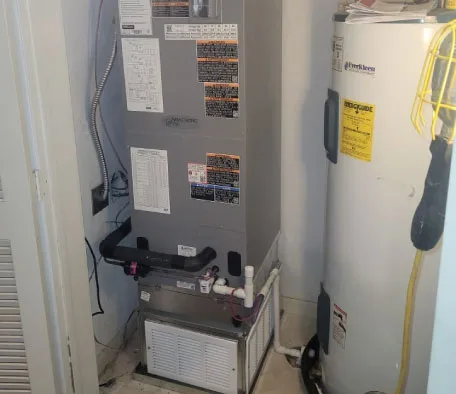
Step 1: Rapid Symptom Assessment & Urgency Triage
When you call, we ask key questions: What’s happening? (no hot water, leak, noise?) When did it start? Have you had previous issues? Is there visible water damage? This intake determines our dispatch priority. No hot water in winter, active leaks, or safety hazards (gas odor, electrical concerns) get same-day dispatch. Non-emergency issues schedule within 24–48 hours. We arrive with a diagnostic toolkit prepared to handle the most likely repair.
- Assess symptom and timeline
- Ask about recent service, power outages, or equipment changes
- Determine tank age and fuel type
- Identify severity: comfort issue vs. emergency vs. safety hazard
- Dispatch appropriate priority level
Step 2: Visual and Operational Inspection
Our technician visually inspects the tank and surroundings. We look for: water pooling or stains indicating leaks; corrosion or rust on the tank exterior; sediment or debris at the base; venting issues (gas units); visible damage or loose connections. We check the thermostat setpoint and verify the display (if applicable). For gas units, we listen to ignition - a healthy spark click followed by burner flame is normal; repeated clicking suggests ignition failure. We measure water temperature at the nearest hot water faucet and check gas pressure (gas models) and water pressure (should be 40–80 PSI).
- Visually inspect tank for leaks, corrosion, sediment accumulation
- Check thermostat setpoint and readiness display
- Listen to gas ignition (single click is normal; repeated clicking suggests failure)
- Measure hot water outlet temperature under flow
- Check incoming water temperature and system pressure
- Verify gas connections, water lines, and venting (gas units)
- Note any visible safety concerns: gas smell, standing water, electrical hazards
Step 3: Targeted Testing Toward Root Cause
Once inspection narrows the problem, we perform specific tests. For no-heat, we test pilot ignition (gas) or heating element resistance (electric). For temperature fluctuation, we run multiple temperature readings across different flow rates to detect instability. For leaks, we pressure-test the tank and fittings to isolate the leak source. For noises, we run the tank through a heating cycle and listen to narrow down the sound source. For slow recovery, we time how long the tank takes to reheat 10 gallons of water and compare to the manufacturer’s recovery rate specification.
- Test pilot ignition spark and flame sensing (gas models)
- Measure gas pressure and compare to manufacturer specification
- Test heating element resistance (electric models)
- Run multiple temperature measurements to detect fluctuation
- Perform pressure test on tank and all fittings to locate leaks
- Flush a bucket of water to observe color and sediment
- Listen to heating cycle to isolate noise source
- Check anode rod for remaining protection (if accessible)
Step 4: Repair or Part Replacement
Once we’ve identified the failure, we fix it. For no heat, we replace the heating element (electric), repair the pilot/gas valve assembly (gas), or install a new thermostat if testing shows failure. For leaks from fittings, we tighten or replace seals; for tank-body leaks, we recommend replacement. For sediment-related noise and efficiency loss, we drain the tank fully and flush thoroughly. For corroded components, we replace them with OEM parts. If descaling is needed, we perform that as well. We pressure-test all repairs before finishing.
- Replace failed heating element with OEM part (electric models)
- Replace gas control valve or pilot ignition assembly (gas models)
- Install new thermostat if testing confirms failure
- Tighten or replace leaking fittings and connections
- Flush tank sediment through drain valve or with circulation flushing kit
- Replace anode rod if depleted or corroded
- Pressure-test all water-side connections
- Perform combustion analysis (gas models) to confirm safe operation
Step 5: Full System Testing and Customer Education
Before we finish, your repaired tank runs through a complete test cycle. We power it on, confirm ignition/heating, and monitor temperature rise. We measure outlet temperature over 15–30 minutes to ensure stability and adequate recovery rate. For gas units, we test combustion and verify vent draw is safe. We verify that all leak points are dry. We walk you through what failed, what we repaired, and what maintenance steps can prevent future failures - especially the importance of annual flushing in Branson’s hard water.
- Activate heating element or burner and monitor ignition and operation
- Measure water temperature rise over baseline 15-minute cycle
- Test temperature stability across multiple flow rates
- Verify all leak points are dry under normal operation pressure
- Test pressure relief valve briefly—should open and drain
- Perform combustion analysis and vent draw testing (gas models)
- Confirm system maintains setpoint temperature without excessive cycling
- Walk you through failure root cause and prevention steps
- Provide invoice, warranty coverage details, and maintenance recommendations
- Leave emergency contact number for after-hours questions
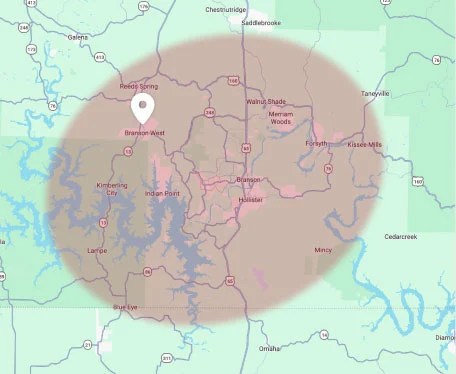
Don’t See Your Location?
We may still be able to help! Give our team a call today to see if we service your neighborhood, and we’ll be happy to assist you.
Service Areas
Tank Water Heater Repair Service Areas in Southwest Missouri
We provide emergency and routine tank water heater repair across the Branson region - from our home base out to the smaller communities along the Table Rock Lake corridor.
Proudly Serving Our Communities Around:
Other Locations We Serve:
Explore More
Complete Water Heating & Home Comfort Solutions
A repaired water heater performs best as part of a complete home comfort plan. Explore the related services we provide for homes across the Branson area.
Tank Water Heater Installation & Replacement
When repair isn’t cost-effective, we install new systems sized correctly for your household’s hot water demand.
Explore Tank Water Heater Installation & ReplacementTank Maintenance & Tune-Up Plans
Annual flushing, anode rod inspection, and sediment removal prevent emergency repairs and extend tank life significantly.
Explore Tank Maintenance & Tune-Up PlansTankless Water Heater Systems
If you’re considering upgrading to on-demand hot water, we install and service tankless systems with expertise equal to our tank work.
Explore Tankless Water Heater SystemsWater Conditioning & Softening
Branson’s hard water accelerates tank corrosion. Softening reduces sediment buildup, extends tank lifespan, and improves water quality throughout your home.
Explore Water Conditioning & SofteningHVAC & Heating Services
Your furnace and heating system matter as much as hot water. We handle complete home comfort solutions.
Explore HVAC & Heating ServicesYour Tank Water Heater Repair
Get Your Tank Water Heater Repaired Fast
Tank water heater failures are urgent. A broken unit means no hot water; a leaking tank threatens water damage to your home. 360 Comfort Solutions responds with same-day service availability, accurate diagnosis, and transparent repair pricing. We bring 40+ years of hands-on experience to keeping Branson homes in hot water, and we know every failure pattern and every fix. When you call with a tank problem, you get a technician who diagnoses methodically, explains what’s broken and why, and gives you honest repair-vs.-replacement guidance. You’re not paying for guesswork - you’re paying for expertise that stands behind the work with parts and labor warranty.
Questions & Answers