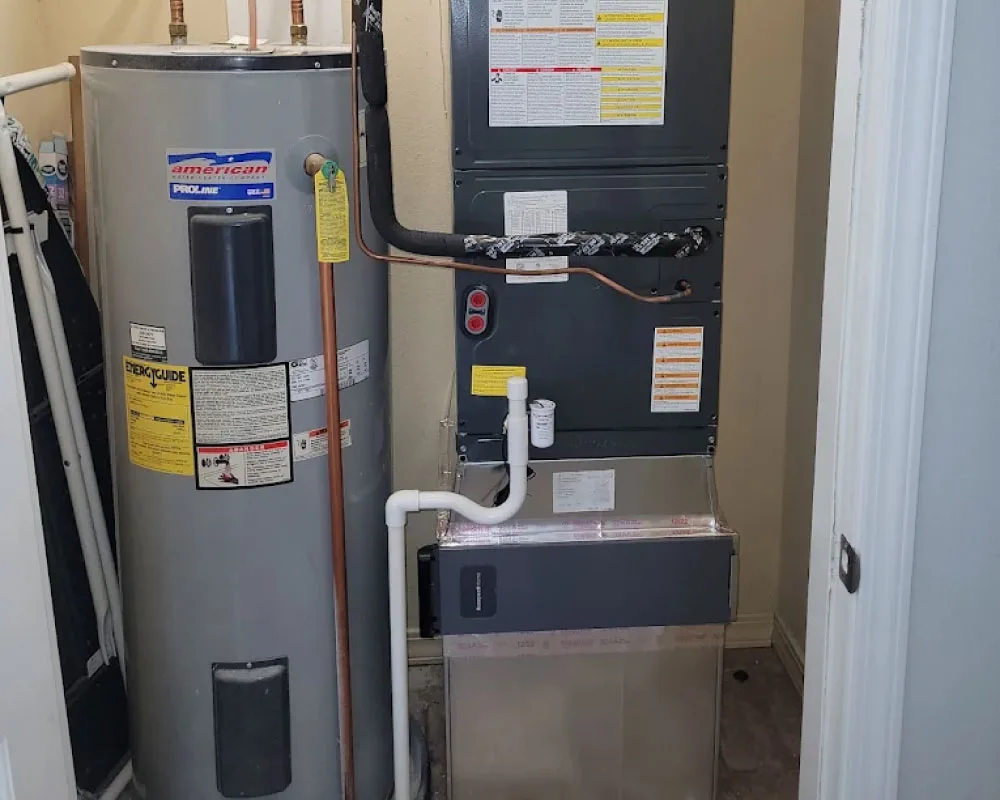
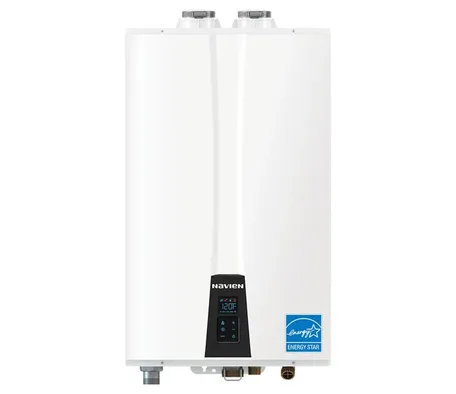
Tankless Water Heater Installation
Professional Tankless Water Heater Installation in Branson, MO
Ready to upgrade to endless hot water and cut your water heating costs? We install gas and electric tankless systems tailored to your home’s flow demands and your comfort preferences.
Get a Free Estimate
Why Choose Us
Why Branson Homeowners Trust Us for Tankless Installation
A new tankless water heater is a 20-year decision. Here’s what sets 360 Comfort Solutions apart when it’s time to install or replace your water heating system.
Ready to Install a Tankless Water Heater?
Whether you’re upgrading from a failing tank, replacing an aging unit, or installing your first tankless system, we’ll help you understand your options and handle installation with precision.
Our Installation Process
How We Install Your Tankless Water Heating System
From the first assessment to the final walk-through, here’s exactly what to expect when 360 Comfort Solutions installs your new tankless water heater.
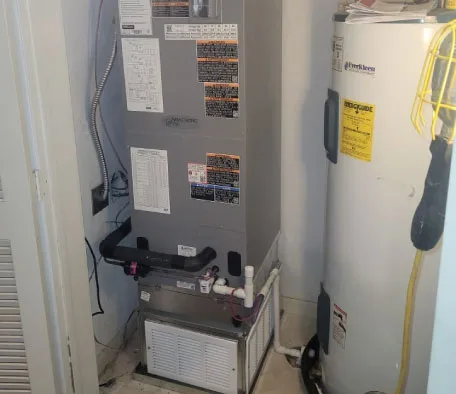
Step 1: Comprehensive Home Assessment and Demand Analysis
Your installation begins with a detailed evaluation of your home’s hot water needs. We analyze your home’s square footage, number of bathrooms, simultaneous appliance usage (showers, laundry, dishwasher running at once), and your typical peak demand times. We measure your existing water pressure and flow rate at key points. We also discuss your preferences: desired water temperature, budget, and whether you prefer gas (higher flow, higher upfront cost) or electric (lower cost, lower flow rates). This assessment determines everything about your system selection and installation approach.
- Evaluate household size, bathrooms, and simultaneous demand patterns
- Measure incoming water pressure and existing supply line sizing
- Assess current gas line capacity (for gas models) or electrical panel availability (for electric)
- Review venting options and clearances (critical for gas combustion safety)
- Inspect hot water piping layout and existing tank location
- Discuss usage preferences and efficiency goals
- Calculate required BTU output or kilowatt demand
Step 2: System Sizing and Equipment Selection
Based on your demand analysis, we recommend the right unit size and type. A 2-person household with one bathroom may need 100,000 BTU (gas) or 8–10 kW (electric). A 4-person household with 2 bathrooms and peak simultaneous demand needs 140,000–160,000 BTU (gas) or 15–18 kW (electric). We present multiple equipment tiers - standard efficiency, high efficiency, and premium - with side-by-side comparisons of energy costs, warranties, and features. We explain gas versus electric trade-offs: gas units deliver higher flow rates and temperature rise but require venting; electric units are simpler and cheaper upfront but need adequate electrical service.
- Calculate required BTU output based on flow demand and temperature rise
- Present gas unit options: Rinnai, Navien, Sterling, Lochinvar
- Present electric unit options with kW and flow rate specs
- Compare energy efficiency, warranty coverage, and rebate eligibility
- Explain maintenance requirements (descaling frequency, filter changes)
- Provide detailed written quote with all specifications and timelines
- Review financing options to match your budget
Step 3: Utility Infrastructure Upgrades and Preparation
For many homes, existing gas or electrical infrastructure needs upgrades before a tankless unit can operate safely and efficiently. We inspect your gas line (if installing gas) and measure pipe diameter, pressure drop, and distance from the meter. If the line is undersized or blocked, we upgrade it to handle peak demand without pressure loss. For electric units, we verify your electrical panel has adequate available amperage; if not, we discuss panel upgrades or unit downsizing. For gas units, we evaluate venting options: direct venting (most common), power venting, or concentric venting. We ensure your chosen vent route is safe, code-compliant, and positions the exhaust outlet correctly.
- Inspect and measure existing gas lines for diameter and condition
- Upgrade gas lines if undersized or corroded (high-pressure rating required)
- Verify electrical panel capacity for electric units (usually 40–50 amps per unit)
- Plan electrical sub-panel or upgrade if needed
- Evaluate venting route and install power venting if passive venting insufficient
- Install descaling isolation valves for easy future maintenance
- Prepare hot water outlet piping to reach living spaces efficiently
- Secure mounting location (wall stud-reinforced, vibration-isolated pad)
Step 4: Professional Installation and System Integration
Our installation crews handle unit mounting, all utility connections, safety testing, and system commissioning. For a gas tankless unit, we secure the unit to a wall stud-reinforced area, connect the gas supply using approved tubing and fittings, run water inlet and hot outlet lines using appropriate materials (copper, PEX, or approved plastic), and install the vent pipe with proper slope and termination. For electric units, we run electrical supply from the panel using appropriately sized wire, install disconnect switches for safety, and make all water connections. We pressure-test all water lines to ensure no leaks, and we purge air from the system before commissioning.
- Mount unit securely to wall framing or pedestal base
- Connect gas supply (if gas model) with proper regulator and shut-off valve
- Run water inlet and outlet lines with appropriate isolation and ball valves
- Install vent pipe with proper slope and outdoor termination (gas models)
- Connect electrical supply with proper breaker and disconnect switch (electric models)
- Install water filters if recommended
- Perform pressure testing on all water connections
- Purge air and debris from water lines before activation
Step 5: Full Commissioning, Testing, and Handoff
Before you use your new tankless system, we conduct comprehensive testing. We bring the unit online, set initial water temperature, and measure output temperature at multiple flow rates to confirm stability. We test gas ignition and combustion (using a combustion analyzer for carbon monoxide safety on gas models). We verify venting draw and measure stack temperature to ensure efficient operation. We program the thermostat or digital display to your preferred temperature settings. We walk you through the unit’s control panel: how to adjust setpoint temperature, how to enable economy mode, and how to access descaling ports. We leave you with equipment documentation, warranty cards, maintenance intervals, and our contact information for questions.
- Activate unit and verify ignition and water heating (gas models) or element function (electric)
- Measure outlet water temperature across low, medium, and high flow rates
- Confirm temperature stability—no wild swings between hot and cold
- Test safety shutdown if flow drops below unit threshold
- Verify venting integrity and measure stack temperature (gas models)
- Perform carbon monoxide ambient testing (gas models)
- Program display to your preferred setpoint temperature
- Show you how to access and use the descaling ports for future service
- Provide complete handoff with documentation, warranty, and maintenance schedule
- Walk through seasonal adjustments (setpoint changes for summer/winter)
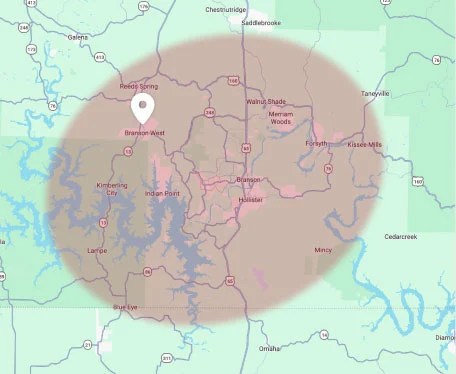
Don’t See Your Location?
We may still be able to help! Give our team a call today to see if we service your neighborhood, and we’ll be happy to assist you.
Service Areas
Tankless Water Heater Installation Service Areas in Southwest Missouri
We install tankless systems across the Branson region and surrounding communities - from our home base out to the smaller communities along the Table Rock Lake corridor.
Proudly Serving Our Communities Around:
Other Locations We Serve:
Explore More
Complete Water Heating and Home Comfort Solutions
A new tankless water heater performs best as part of a complete home comfort system. Explore the related services we provide for homes and businesses across the Branson area.
Tankless Water Heater Repair & Service
When your tankless system breaks down, we diagnose and fix issues fast - often same-day service for common failures.
Explore Tankless Water Heater Repair & ServiceTankless Maintenance Plans
Annual descaling and inspections to keep your system running efficiently for 20+ years.
Explore Tankless Maintenance PlansTank Water Heater Services
If tankless isn’t the right fit, we install and service traditional tank units with the same expertise.
Explore Tank Water Heater ServicesWater Conditioning & Softening
Hard water shortens tankless life. Water softening or filtration reduces descaling frequency and protects your investment.
Explore Water Conditioning & SofteningFurnace Installation & Replacement
Complete home comfort includes winter heating. We install efficient furnaces to pair with your water heating system.
Explore Furnace Installation & ReplacementFinancing Options
Flexible payment plans make upgrading to tankless affordable without large upfront cost.
Explore Financing OptionsUpgrading to a tankless water heater is one of the smartest investments you can make for home comfort and energy savings. The right system - properly sized, professionally installed, and maintained annually - will deliver reliable hot water and lower energy bills for 20+ years. Our 40+ years of hands-on experience means we know which systems perform well in the Branson area, understand the local hard water challenges that affect system longevity, and are committed to supporting your system with professional maintenance long after installation. Call us to schedule a free in-home evaluation and let’s find the perfect tankless system for your home.
Questions & Answers