Heat Pump Maintenance
Heat Pump Maintenance & Seasonal Tune-Up in Branson, MO
Your heat pump should work flawlessly through winter heating season and summer cooling season. Annual preventive maintenance is the single most effective way to keep it running at peak efficiency, prevent emergency failures, and extend system lifespan. We perform comprehensive tune-ups before heating and cooling seasons, catching issues before they become costly problems.
Get a Free Estimate
Why Maintenance Matters
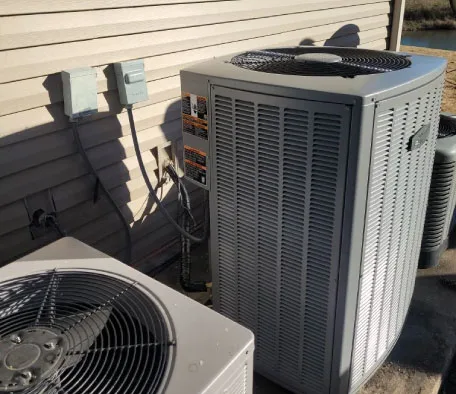
Why Ongoing Heat Pump Maintenance Protects Your Investment
A heat pump works year-round—heating in winter, cooling in summer. Here’s why 360 Comfort Solutions customers schedule preventive tune-ups before every season change.
Protect Your Heat Pump Before the Season Changes
Whether it’s spring before cooling season or fall before heating kicks in, a scheduled tune-up ensures your system is ready. We test both heating and cooling capabilities, even if you’re only calling before one season, because that’s where hidden problems hide.
Our Maintenance Routine
Our Heat Pump Preventive Maintenance Routine
From the first call to the final handoff report, here’s exactly what 360 Comfort Solutions does during every heat pump seasonal tune-up.
Step 1: Pre-Visit Intake & Seasonal Context
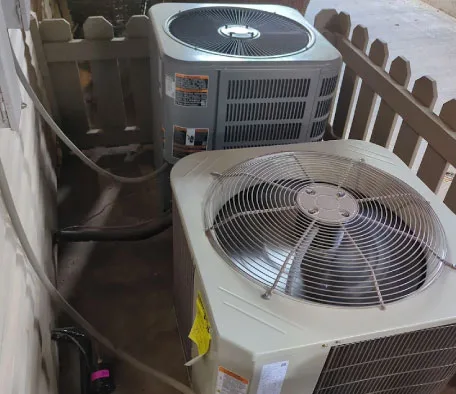
When you schedule maintenance, our dispatcher asks targeted questions to prepare our technician. What season are you preparing for (heating, cooling, or both)? Are you noticing any changes—compressor cycling frequency, blower noise, efficiency drifts, uneven heating or cooling between rooms—since the last service? Have you had any repairs recently, and if so, what was repaired? Does your system use supplemental heating in winter, and if so, how often does it engage? This context helps us prioritize diagnostic testing, alerts us to potential follow-up issues, and ensures we bring the right equipment.
- Confirm whether the tune-up is pre-heating, pre-cooling, or annual full maintenance
- Ask about any comfort changes, unusual sounds, efficiency concerns, or thermostat anomalies
- Review repair history to identify systemic patterns or component wear trends
- Determine if the system has been idle for a season and needs full operational commissioning
- Check thermostat settings, seasonal programming, and auxiliary heating setpoints
- Clarify whether the customer has noticed any refrigerant odor or visible leaks
Step 2: Visual System Walkthrough & Coil Inspection
Our technician arrives and systematically inspects both outdoor and indoor components, documenting findings with photos. We check the outdoor unit for seasonal debris (leaves, grass clippings, dust, pollen buildup) that blocks critical airflow across the condenser coils. Even a half-inch of dust on outdoor coils reduces heat transfer efficiency by 10–20%. We examine the indoor coil for frost accumulation (a sign of improper defrost cycle or low refrigerant), corrosion from humidity exposure, or blockage from dust and mold. We verify that refrigerant line insulation is intact and not cracked or peeling (which allows heat loss in winter heating mode and reduces cooling efficiency in summer). We inspect electrical connections at the outdoor unit and indoor air handler for corrosion, oxidation, and loose terminals that increase resistance and waste electrical power. We test the drain pan flow to ensure condensation drains freely and doesn’t back up into the system.
- Remove seasonal debris from outdoor unit (leaves, dirt, condensation blockages from drain)
- Visually inspect indoor coil for frost buildup, corrosion, biological growth, or blockage
- Check refrigerant line insulation for cracks, gaps, or deterioration from UV exposure
- Verify all electrical connections at outdoor unit compressor and contactor for tightness and corrosion
- Test indoor unit electrical connections and thermostat wiring for loose terminals
- Test drain pan flow and confirm condensate drains freely from indoor coil
- Look for visible refrigerant leaks (oil stains, hissing, corrosion patterns around connections)
- Photograph any visible wear, corrosion, or damage for the service record
Step 3: Comprehensive Dual-Mode Diagnostic & Efficiency Testing
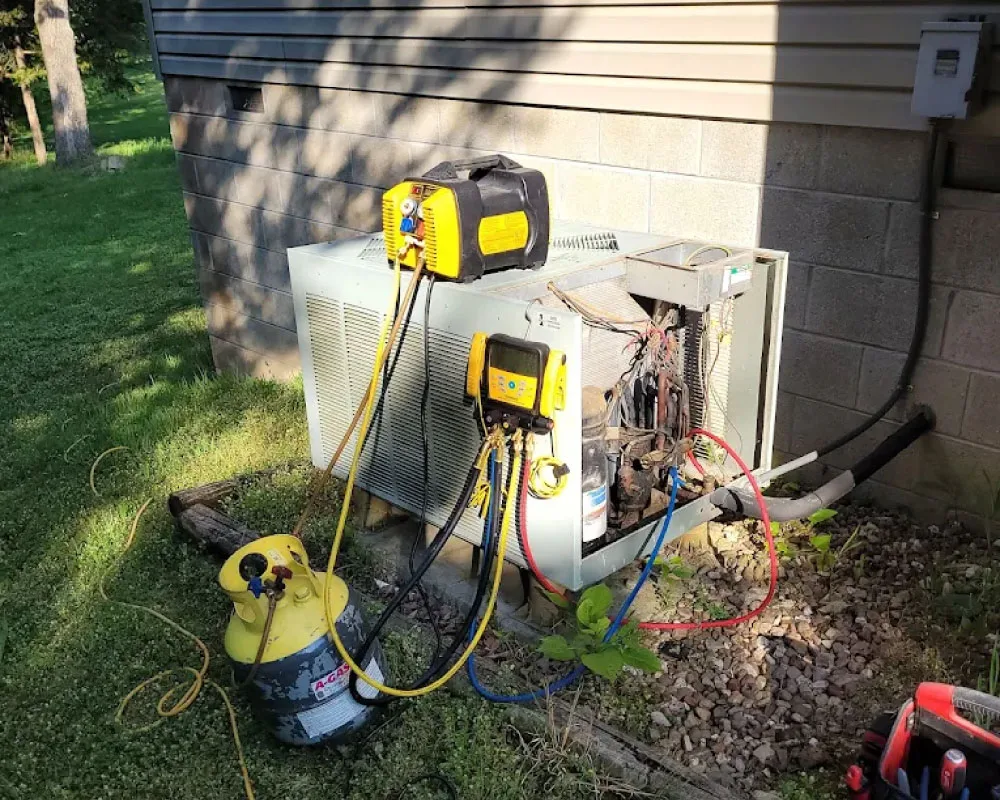
Using EPA-calibrated instruments, we measure refrigerant pressure on the high side (discharge) and low side (suction) in both heating and cooling modes and compare actual readings to nameplate specifications—this tells us if refrigerant charge is correct or if a leak is developing. We calculate superheat and subcooling to verify charge is precise—both too high and too low charge reduce efficiency and can cause compressor damage. We measure airflow at every supply register with a calibrated anemometer or flow hood, confirming that supply air is balanced across the home and return airflow is unrestricted. We check thermostat calibration and test mode switching to ensure the system reliably transitions between heating and cooling. For pre-heating season maintenance, we specifically test defrost cycle operation: triggering a manual defrost, measuring outdoor coil temperature during the defrost phase, verifying the reversing valve energizes and reverses flow, and confirming the cycle terminates when the outdoor coil reaches proper temperature.
- Measure high-side (discharge) refrigerant pressure and compare to nameplate specs
- Measure low-side (suction) refrigerant pressure and compare to nameplate specs
- Calculate superheat at the indoor coil outlet; verify it's within 8–15°F of specification
- Calculate subcooling at the outdoor coil outlet; verify it's within 8–15°F of specification
- Measure airflow at every supply register; confirm balance and total CFM matches design
- Check thermostat accuracy by comparing displayed temperature to calibrated thermometer
- Test thermostat mode switching (heating ↔ cooling) to confirm control signals work
- Measure compressor and fan motor running amperage; compare to nameplate and prior readings
- For heating-season: manually trigger defrost cycle and measure outdoor coil temperature
- For heating-season: verify reversing valve energizes and solenoid signal is present
- For heating-season: confirm defrost cycle terminates within 3–10 minutes at proper temperature
- For cooling-season: measure temperature differential across indoor coil; verify capacity
- Document all readings on service form with date and prior visit comparisons
Step 4: Coil & Airway Cleaning (Heating & Cooling Optimization)
We clean outdoor and indoor coils using specialized coil cleaner and soft brushing to restore heat transfer. Dirty coils are a leading cause of reduced efficiency and higher energy bills. For ducted systems, we inspect ductwork connections to ensure no air is escaping. We clean or replace air filters and verify return airflow is unrestricted. Clean coils alone can restore 10–15% of lost capacity.
- Clean outdoor coil with low-pressure spray and soft brush
- Clean indoor evaporator coil of dust, mold, and debris
- Replace or clean air filter; check return airway
- Verify duct sealing at all joints (ducted systems)
- Inspect indoor unit condensate drain and safety switch
- Test airflow balance across all registers
Step 5: Electrical Component Testing & Capacitor Evaluation
Capacitors support compressor and fan motor startup; weak capacitors degrade efficiency and stress motors. We test all capacitors with a dedicated meter, measure voltage at key points, inspect terminal connections for corrosion, and test safety switches. If any component is nearing end-of-life, we recommend replacement before it fails. One preventive capacitor replacement avoids a compressor failure that can sideline your system for days during an emergency.
- Test all capacitors and measure microfarads (µF) against specifications
- Measure voltage at compressor and fan terminals
- Inspect and clean corroded terminal connections
- Test thermostat call signals and safety switches
- Check contactor operation and coil integrity
- Identify components near failure and recommend preventive replacement
Step 6: System Run-Through & Handoff Documentation
We run your heat pump through complete heating and cooling cycles (or simulate if the season doesn’t allow). We verify comfort delivery, listen for unusual sounds, confirm all mode transitions work smoothly, and document every finding on a detailed service invoice. You receive clear guidance on maintaining your system until the next visit and immediate contact info if questions arise about operation.
- Run full heating cycle (or prepare heating test if cooling-season visit)
- Run full cooling cycle (or prepare cooling test if heating-season visit)
- Measure temperature rise/drop at supply registers
- Verify thermostat mode switching and setpoint accuracy
- Listen for compressor noise, fan bearing wear, or electrical anomalies
- Document all test results and component conditions on invoice
- Provide homeowner walkthrough of findings and maintenance guidance
- Offer financing or plan enrollment for recommended future service
Don’t See Your Location?
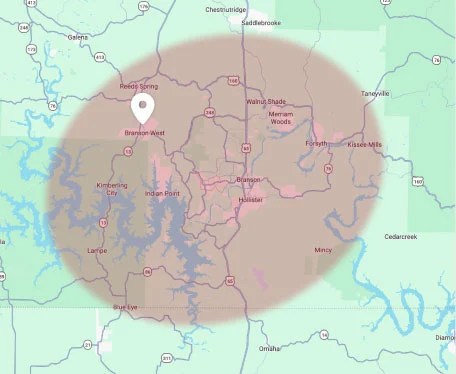
We may still be able to help! Give our team a call today to see if we service your neighborhood, and we’ll be happy to assist you.
Service Areas
Heat Pump Maintenance Service Areas in Southwest Missouri
We schedule seasonal tune-ups across the Branson region year-round — from our home base out to the smaller communities along the Table Rock Lake corridor.
Proudly Serving Our Communities Around:
Other Locations We Serve:
Explore More
Comprehensive Heat Pump Support—Beyond Maintenance Alone
Maintenance is the foundation of a reliable heat pump, but we offer the full range of services to keep your system running strong year after year.
Heat Pump Repair & Service
If maintenance uncovers a refrigerant leak, failing compressor, or electrical issue that needs immediate attention, we provide emergency diagnosis and same-day repair service.
Explore Heat Pump Repair & ServiceHeat Pump Installation & Replacement
Ready to upgrade an aging heat pump losing efficiency? We handle full load calculation, equipment selection, ductwork inspection, installation, and commissioning.
Explore Heat Pump Installation & ReplacementCentral AC Repair & Maintenance
If you have a backup central AC system or prefer cooling-only service, we provide the same level of diagnostic and maintenance care.
Explore Central AC Repair & MaintenanceFurnace Maintenance & Tune-Up
Many Branson homes use a furnace as backup heat with a heat pump for primary heating. We maintain furnaces with the same rigor we apply to heat pump systems.
Explore Furnace Maintenance & Tune-UpMini-Split System Maintenance
Ductless split systems need the same preventive coil cleaning, refrigerant verification, and electrical testing that ducted heat pumps require.
Explore Mini-Split System MaintenanceExplore Financing Options
If maintenance reveals upcoming repairs or component replacements, financing spreads the cost over time and makes immediate fixes affordable without budget strain.
Explore Explore Financing OptionsYour Heat Pump Maintenance
Make Heat Pump Maintenance Part of Your Annual Comfort Routine
A well-maintained heat pump delivers reliable heating in winter and cooling in summer without surprises. You’ll enjoy lower energy bills, no emergency failures during peak seasons, and the confidence that your system is operating at design specifications. The small investment in preventive tune-ups saves thousands in avoided emergency repairs and extends your system’s working life by 5+ years. Our 40+ years in the Branson area means we know what to look for before heating season and what can go wrong if the defrost cycle isn’t working. Don’t wait for your heat pump to fail on a freezing night or sweltering afternoon—schedule your maintenance visit today.
Questions & Answers