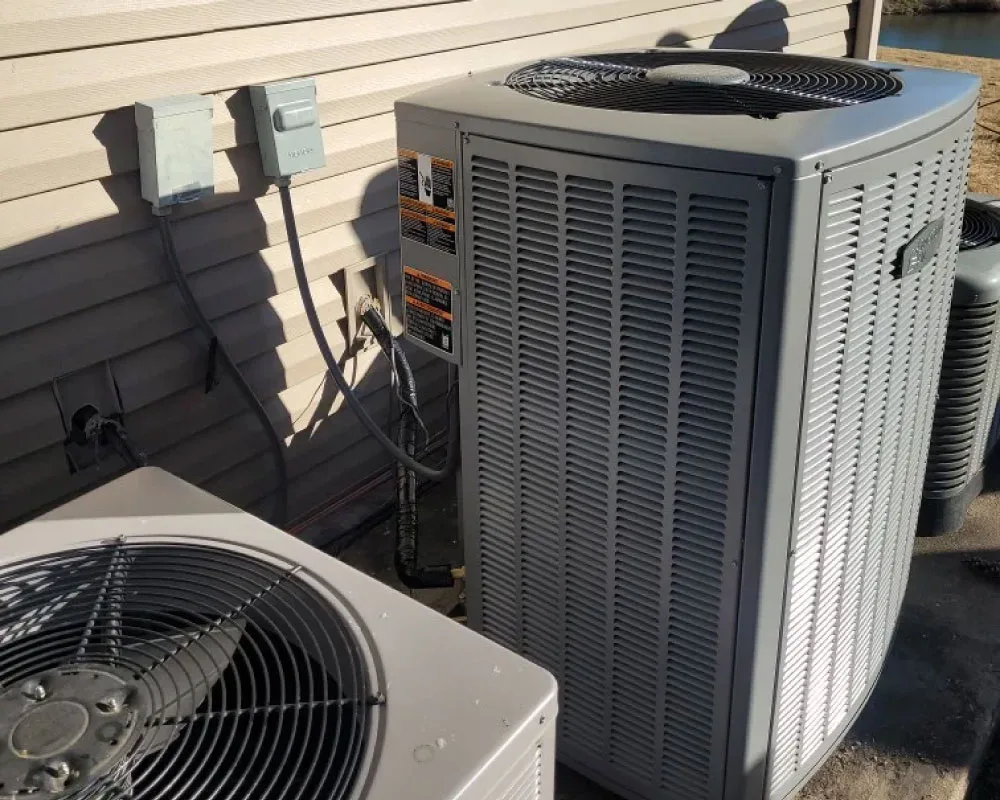
Heat Pump Repair & Emergency Service
Heat Pump Repair & Emergency Service in Branson, MO
Your heat pump should handle both heating and cooling seamlessly. When something goes wrong - whether your system is losing heating efficiency in winter, cooling capacity in summer, or shutting down entirely - we diagnose the problem quickly and repair it right. Same-day emergency service available during peak seasons.
Get a Free Estimate
Why Choose Us
What Sets Our Heat Pump Repair Service Apart in Branson
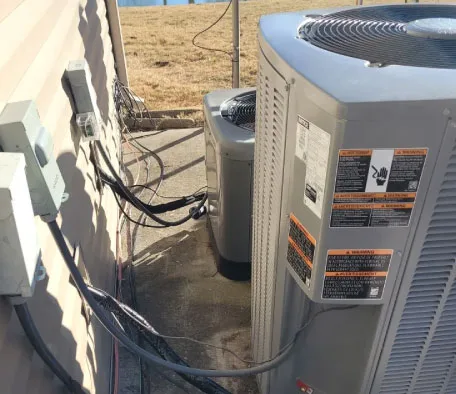
Heat pump repair demands dual-mode expertise that most HVAC shops don’t have. Here’s what makes 360 Comfort Solutions the right call when your system stops heating or cooling reliably.
Your Heat Pump Isn’t Performing Right. We’ll Find Out Why.
Whether your system is losing heating in winter, struggling to cool in summer, running continuously, or shutting down unexpectedly, we perform a thorough diagnostic and walk you through repair options before we replace any parts.
Our Repair Process
Our Heat Pump Repair & Diagnostic Process
From the first phone call to the final handoff, here’s exactly what to expect when 360 Comfort Solutions diagnoses and repairs your heat pump.
Step 1: Phone Intake & Seasonal Context
You call with your heat pump problem. We ask targeted questions: Is it a heating issue, cooling issue, or both? What mode is the system stuck in, if any? Are you seeing auxiliary heat cycling constantly? How long has the problem been happening? This context tells us exactly what to bring and how to prepare diagnosis. A homeowner describing “no heat on a 20-degree morning” requires different troubleshooting than one saying “cooling got weak suddenly.”
- Clarify whether the issue is heating, cooling, or both modes
- Determine if supplemental heating is engaging or stuck on
- Ask about recent weather changes that triggered the problem
- Establish urgency (emergency with no heat/cooling vs. reduced efficiency)
- Gather information on thermostat behavior and settings
- Confirm system age and repair history if available
Step 2: Visual Inspection & Dual-Mode System Walkthrough
Our technician arrives and inspects both the outdoor unit and indoor components. We check outdoor airflow (ice, debris, fan operation), examine refrigerant line insulation, inspect electrical connections, check the indoor coil for ice or blockage, and examine the thermostat. We test the system in both heating and cooling modes (if possible given the season) or prepare a diagnosis plan if one mode isn’t currently useful. This is where heat pump expertise matters. We know what to look for in a reversing valve operation, we recognize defrost cycle ice patterns, and we spot compressor stress signals that generic HVAC techs miss.
- Inspect outdoor unit for ice, frost patterns, airflow blockage
- Listen to compressor and reversing valve operation in both modes
- Check refrigerant line insulation and connections for damage
- Examine indoor coil for freeze-up or corrosion patterns
- Test thermostat settings and mode switching
- Measure airflow at supply registers
- Document photos of any visible damage or unusual wear
Step 3: Detailed Dual-Mode Diagnostic Testing
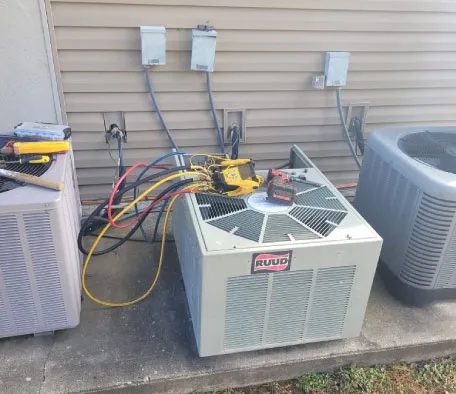
Using precision instruments calibrated for heat pump systems, we measure refrigerant pressure on high and low sides in both heating and cooling modes, superheat and subcooling to confirm proper refrigerant charge, reversing valve electrical continuity and solenoid activation, system voltage and amperage draw in both modes, compressor current signature analysis, defrost cycle timing and termination, auxiliary heat thermostat setpoint and engagement logic, and outdoor fan operation during heating vs. cooling. We document every measurement. If the system’s heating capacity differs dramatically from cooling capacity, or if one mode is normal while the other is failing, that directs the diagnosis immediately.
- Charge system with gauges; compare readings to nameplate specs in both modes
- Test reversing valve solenoid with multimeter for electrical continuity
- Measure temperature rise/drop across indoor coil in heating and cooling
- Verify outdoor unit fan operation in defrost mode (heating)
- Test auxiliary heat relay activation and thermostat setpoint
- Check for electrical ground faults or compressor winding shorts
Step 4: Diagnosis & Repair Recommendation
We explain exactly what we found. Here’s what’s failing, here’s why, here’s the repair cost, and here’s how long it should last. If your heat pump is 8+ years old and the compressor is failing, we discuss replacement cost versus repair cost. If a reversing valve is stuck, we explain whether cleaning or valve replacement is needed. If refrigerant is low due to a leak, we discuss leak location and repair approach. This conversation includes the bigger picture. If auxiliary heating is running constantly because the heat pump isn’t maintaining proper refrigerant charge, fixing that charge restores heating and eliminates the expensive supplemental heat.
- Present findings in plain language specific to heat pump operation
- Show gauge readings and seasonal test results to support diagnosis
- Explain cost of repair vs. full system replacement
- Discuss temporary vs. permanent solutions
- Confirm parts availability and repair timeline
- Get written approval before proceeding
- Document all diagnostic data on the service invoice
Step 5: Repair Execution & Full Seasonal Testing
Once approved, we perform the repair. If it’s a refrigerant leak, we repair it, evacuate the system properly, and recharge to exact specs - critical because improper charge ruins heat pump efficiency in both modes. If it’s a reversing valve, we replace it and test operation in both heating and cooling. If it’s compressor failure, we replace the compressor, confirm all electrical and refrigerant connections, and verify heating and cooling capacity are restored. After the repair, we run the system through complete heating and cooling cycles, verify comfort throughout the home, measure airflow, check all pressures, confirm auxiliary heat behaves correctly, and document that the unit meets design specs in both modes.
- Perform repair following manufacturer procedures specific to the brand
- Use factory-correct refrigerant type and charge amount
- Verify all electrical connections and control signals
- Run both heating and cooling cycles under load
- Confirm even temperature distribution throughout home
- Test auxiliary heat activation at the correct outdoor temperature
- Measure final gauge readings and compare to initial diagnostics
- Document that the system operates at design specs in both modes
Step 6: Handoff & Warranty Documentation
Before we leave, you get a full explanation of the repair, a detailed written summary of what was repaired or replaced, warranty details, and guidance on maintaining both heating and cooling performance. We provide seasonal maintenance reminders (pre-heating season and pre-cooling season) and our contact information for follow-up questions.
- Review repair scope and all replaced components
- Explain warranty coverage (parts and labor terms)
- Discuss seasonal maintenance to prevent future issues
- Answer questions about heating, cooling, and defrost operation
- Provide invoice with complete repair description
- Offer maintenance plan enrollment for ongoing preventive care
- Share contact info for warranty or technical questions
Don’t See Your Location?
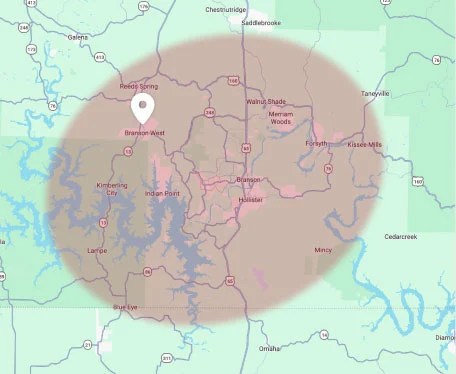
We may still be able to help! Give our team a call today to see if we service your neighborhood, and we’ll be happy to assist you.
Service Areas
Heat Pump Repair Service Areas in Southwest Missouri
We provide emergency and routine heat pump repair across the Branson region - from our home base out to the smaller communities along the Table Rock Lake corridor.
Proudly Serving Our Communities Around:
Other Locations We Serve:
Explore More
Keep Your Heat Pump Running Efficiently - Preventive & Related Services
A repaired heat pump performs best when paired with preventive care and complementary services. Explore what we offer for homes and businesses across the Branson area.
Heat Pump Maintenance & Tune-Up
Seasonal maintenance catches heating and cooling inefficiencies before they become emergencies.
Explore Heat Pump Maintenance & Tune-UpHeat Pump Installation & Replacement
If repair costs are mounting and your system is aging, a new high-efficiency heat pump may cost less over time.
Explore Heat Pump Installation & ReplacementCentral AC Repair & Service
We also repair traditional AC systems if you need summer cooling only.
Explore Central AC Repair & ServiceFurnace Repair & Service
If you have a hybrid system with a backup furnace, we service both the heat pump and furnace.
Explore Furnace Repair & ServiceMini-Split Heat Pump Repair
We repair ductless mini-split systems that function like ducted heat pumps but with zone control.
Explore Mini-Split Heat Pump RepairDuctwork Inspection & Sealing
Leaky ducts reduce heat pump heating and cooling efficiency; we test and seal them.
Explore Ductwork Inspection & SealingYour Heat Pump Repair
Don't Let a Failed Heat Pump Leave You Without Heat or Cooling
A heat pump failure in winter means no heating; in summer, it means no cooling. Unlike a furnace or AC that handle one season each, a heat pump failure is an immediate crisis year-round. 360 Comfort Solutions has repaired thousands of heat pumps across Branson and the surrounding area. We understand the complexity of systems that provide both heating and cooling, we know how to diagnose failures in both modes, and we’re equipped with the specialized instruments that generic HVAC shops don’t have. Our technicians don’t guess at heat pump problems - we test refrigerant charge in both heating and cooling modes, verify reversing valve operation, measure compressor capacity, and confirm exactly what’s broken before we replace any parts.
Questions & Answers